I have twelve weeks to pick my African violet show plants for MAAVS, and I’ve already changed my mind three times. Anyone else relate?
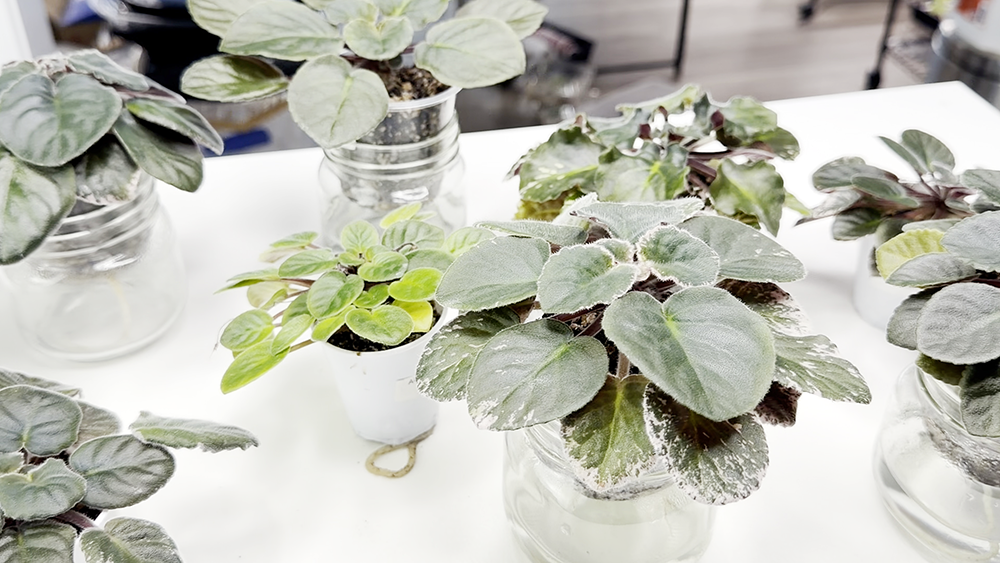
I’ll be showing violets for the first time at the Mid-Atlantic African Violet Society (MAAVS) show in York, Pennsylvania this November. And now is the time to begin preparations…starting with choosing your plants. If you’ve ever stared at your whole African violet collection trying to figure out which one is “show material,” you already know it’s not as simple as picking your prettiest plant. There’s a real process behind choosing an African violet show plant — one that starts weeks, not days, before the show itself. With the Mid-Atlantic African Violet Society show landing on November 5th and 7th, August 13th marked my twelve-week mark, which means it’s decision time. Here’s exactly how I narrowed down my candidates, so if you’ve got a show on your calendar too, you can walk through the same process with me.
Why Twelve Weeks Matters
African violets don’t hit peak form overnight. Leaves need time to fill in evenly, damaged foliage needs time to be replaced with new growth, and bloom cycles need to be timed carefully so your plant peaks on the actual show date — not two weeks before it…or after it. Starting the selection process this early gives me room to correct small issues before they become disqualifying ones.
Symmetry
Before a judge even looks at the blooms, they’re looking at the shape. A show-quality African violet plant should form an even, flat, spiraled rosette — no gaps, no leaves sticking out further than their neighbors, no obvious lean to one side.
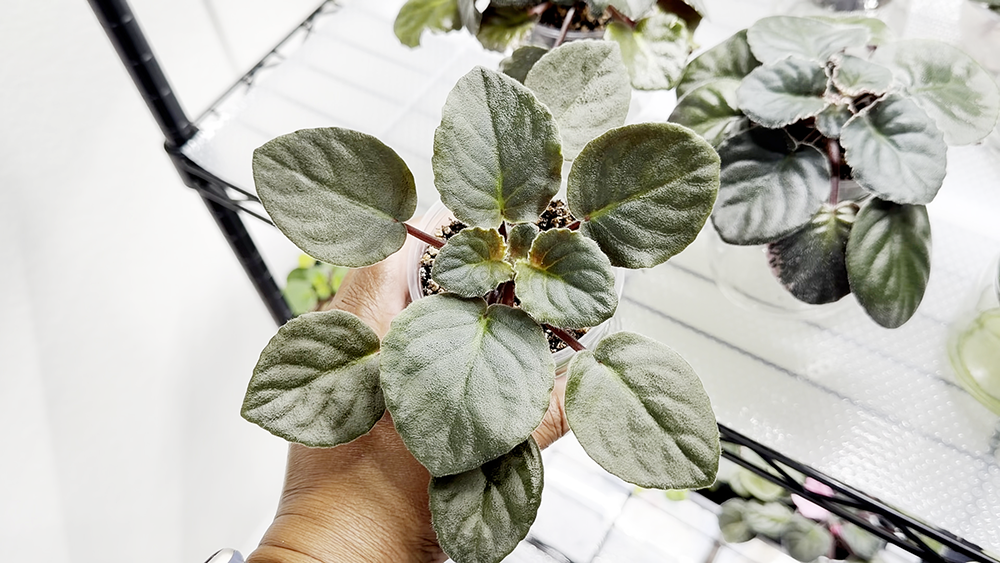
Nothing looks perfectly symmetrical this far out, and that’s fine. What I’m actually evaluating right now is the plant’s “bones” — is the growth pattern even? Are the leaves roughly proportional as they spiral out from the center? Small imperfections are fixable between now and show day. Uneven growth habits generally aren’t. In some cases, it’s about picking the right variety. There are some cultivars that naturally grow a bit more unruly and some that are practically bred for showing. And you’ll often see the latter varieties on the show table with blue ribbons. As much as I love my wild, weirdo varieties, those will be the ones that I’ll be keeping home.
PRO TIP: Rotate your African violets a quarter turn every time you water them. It’s a small habit that helps prevent the lopsided, reaching-toward-the-light look that can throw off symmetry over time.
Bloom Timing
This is the issue that I hear most about at my violet club meetings. A plant blooming beautifully today might be tired and past its prime by November. Meanwhile, a plant just starting to push new buds now might hit ideal, full bloom right on show day…or not.
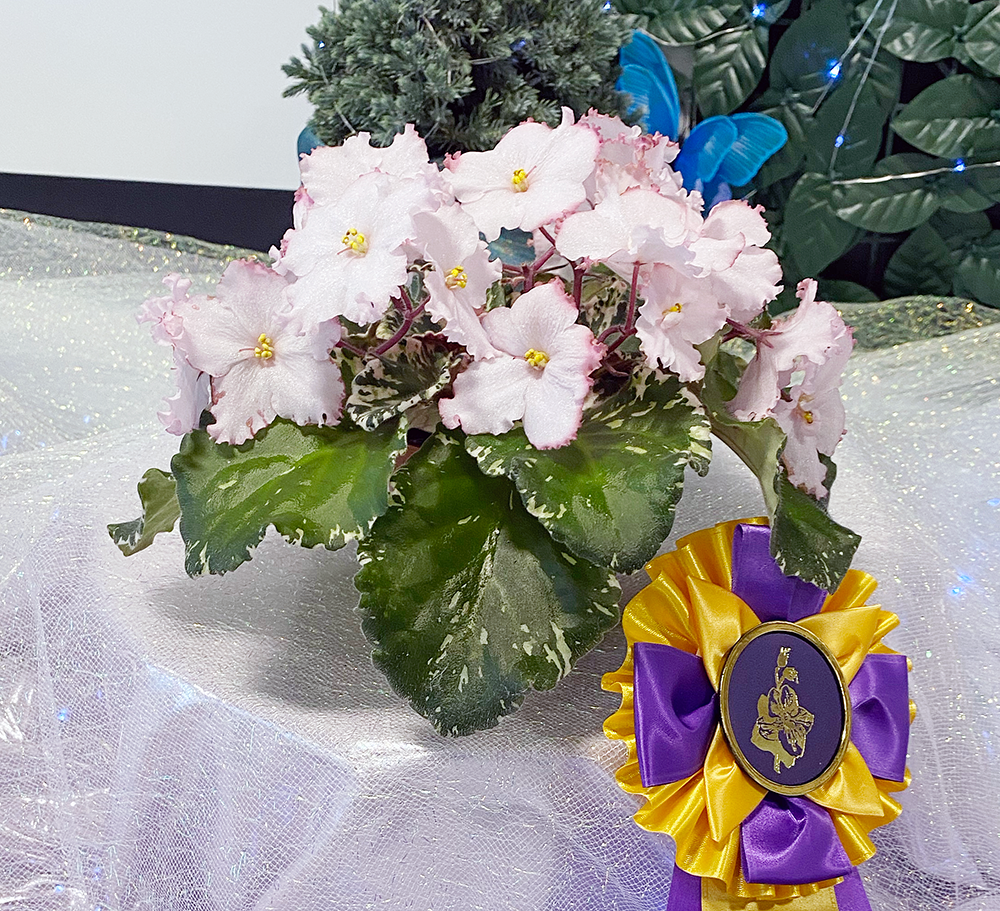
Choosing an African violet show plant means doing a little backward math: where is this plant in its bloom cycle, and will that cycle line up with the show date twelve weeks from now? It’s part science, part educated guess, which is exactly why this selection process starts so early.
Foliage Health
Judges are scoring clean, healthy leaves — no yellowing, no spotting, no watering or pest damage. Of all the show categories, this is the one most within your control between now and the big day.
I’m prioritizing candidates whose outer leaves are already strong and whose center growth is tight and healthy. A plant that’s already dealing with a lot of leaf damage is starting from behind, and twelve weeks isn’t always enough time to fully turn that around.
Growth Stage
The last piece ties everything together — not just where a plant is today, but where it’ll be on show day. A plant that’s too young may not fill out in time. One that’s already mature might peak too early and start declining before judging even happens.
The ideal African violet show plant candidate has enough maturity to have real presence, with enough growing left in it that show week ends up being its actual best week.
This Week’s Prep Tasks
For anyone following along with their own show prep, the AVSA has a recommended show prep schedule on their website. Based on that schedule, here’s what I’m doing with my top candidates this week:
1. Stripping bad leaves — anything yellowing, damaged, or past its prime comes off so the plant’s energy goes toward good new growth and so the plant can establish its symmetrical shape..
2. Checking for suckers — those small offshoots at the base compete with the main crown for energy and they throw off symmetry, so they’re getting removed.
3. Disbudding — pinching off current blooms and buds so the plant redirects its energy into a bloom cycle timed for show day instead of blooming itself out early.
4. Repotting — fresh soil and a properly sized pot give the plant room to fill out symmetrically over the next twelve weeks.
On the bright side: stripping off those leaves and suckers makes more propagation material for me as well!
Conclusion
Choosing an African violet show plant isn’t about picking your prettiest bloom today — it’s about picking the plant with the best shot at peaking, symmetrically and beautifully, exactly when it counts. I’ve got 10 candidates narrowed down, and I’ll be sharing updates as show day gets closer.
Have a show plant of your own in the works? I’d love to hear which one you’re eyeing — leave a comment and let me know! And if you want to see this whole selection process in action, I walk through it step by step in this week’s YouTube video. And subscribe to the channel to follow along.