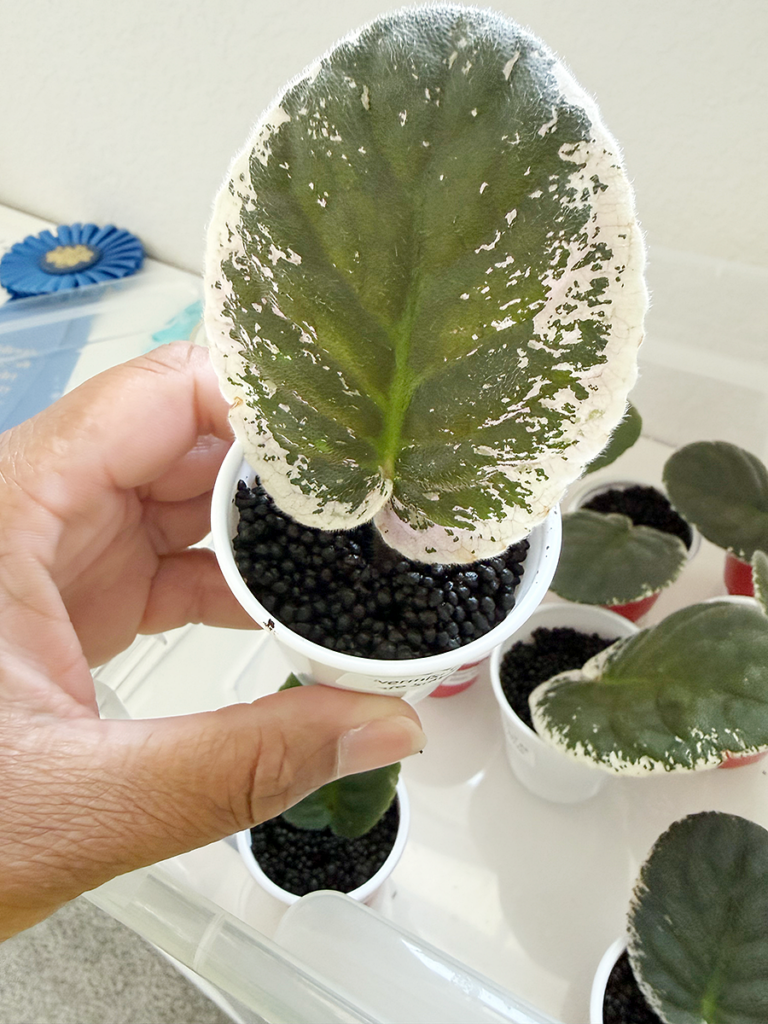
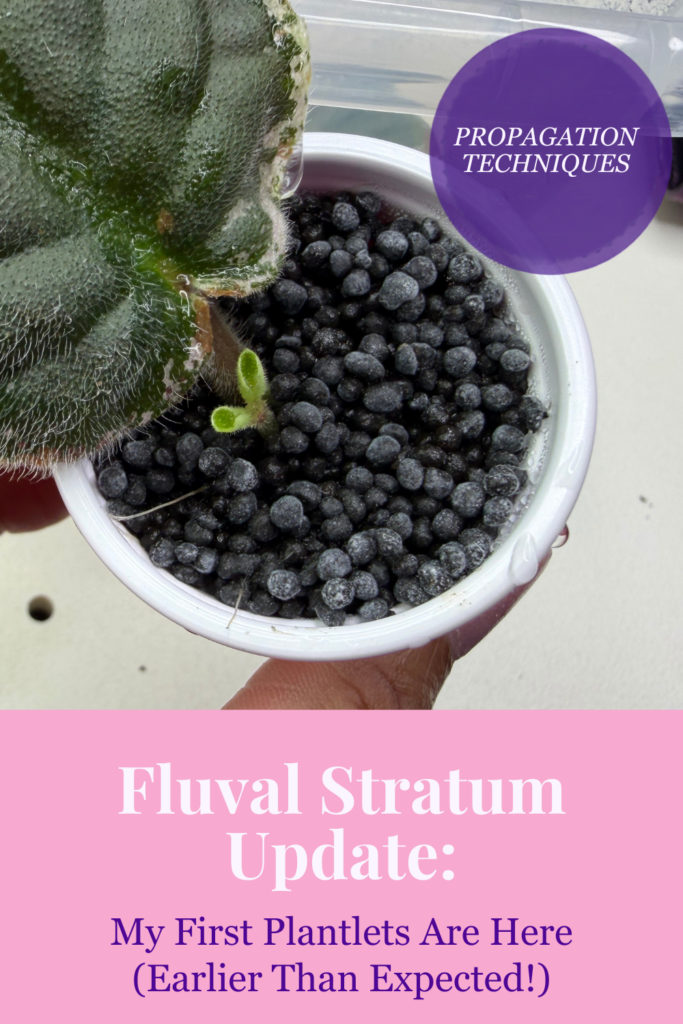
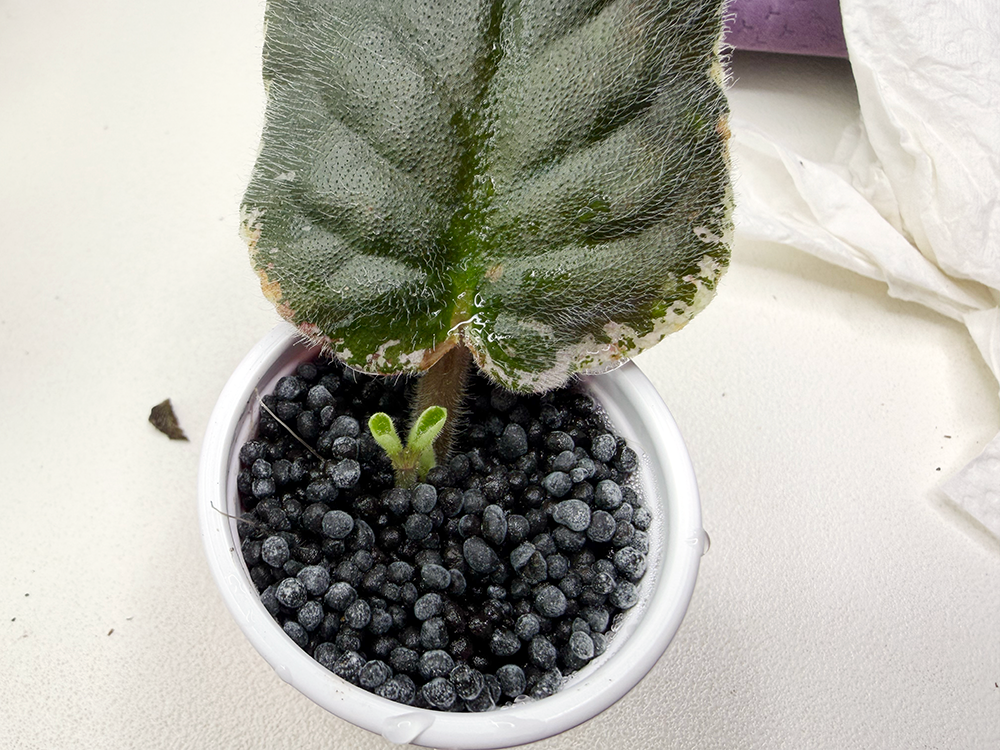
Well, it happened. I was watering my plants yesterday evening and on impulse, checked on my leaves, and there they were — tiny plantlets poking up from one of my Rivermist Sizzle leaves! 😮
If you’ve been following along, you know I’ve been testing Fluval Stratum — as a propagation medium for my African violet leaves. (This is an affiliate link — if you purchase through it, I may earn a small commission at no extra cost to you.) I covered what it is and why it might work well for AV propagation in my first post, and now we’ve got an actual update to talk about.
The Timeline So Far
I planted these leaves in stratum on June 29th. Today is August 5th, which puts us a little over five weeks into the experiment.
For context, here’s roughly what I typically expect with my usual soil and perlite method:
– Rooting: Usually takes about two weeks to a month
– Plantlets appearing: Usually another month or two after that
So by that math, I wasn’t expecting to see plantlets until sometime until in late August at the earliest. Seeing them at five weeks is genuinely earlier than I anticipated.
PRO TIP: If you’re propagating and feeling impatient (no judgment, we’ve all been there), resist the urge to dig around and check on your leaf’s progress. Disturbing the stem while it’s trying to root can do more harm than good.
How the Rest of the Leaves Are Doing
The good news doesn’t stop there — the rest of my leaves in the stratum are all looking healthy…even the one I had to do minor surgery on to get rid of a bit of decay. That was my fault entirely, leaves shouldn’t be touching each other in such a moist environment. Other than that, no mush, no rot, no leaves that gave up on me. Every other leaf is just quietly doing its thing.
I’m calling myself cautiously optimistic at this point. One early plantlet doesn’t mean that stratum is definitively “better” than my usual methods. This could be a case of a particularly strong leaf — but it’s a promising sign, and I’ll keep watching to see if the rest follow on a similar timeline.
What’s Next?
I’ll keep tracking all the leaves and update you as more plantlets (hopefully) show up. If the rest of the batch roots and sprouts on a similar timeline, that’ll tell me a lot more about whether this is a genuine speed advantage or if that Rivermist Sizzle leaf is just an overachiever by nature.
Curious to see the plantlets for yourself? I’ve got the full update on video — check it out on YouTube!
Have you ever had one leaf in a batch surprise you by rooting way faster than the others? Drop a comment and let me know — I love hearing about your propagation wins.
I never thought I’d be walking through the aquarium aisle looking for African violet supplies, but here we are.
If you’ve been following along, you know I’m always tinkering with different propagation methods — water, soil, you name it. So when a couple of fellow AV growers mentioned they were having luck propagating leaves in Fluval Stratum, a substrate for aquarium plants, I figured it was worth a try myself. This post covers what Fluval Stratum actually is, why it might work well for AV propagation, and how I’m using it with my own leaves right now.
What Is Fluval Stratum, Anyway?
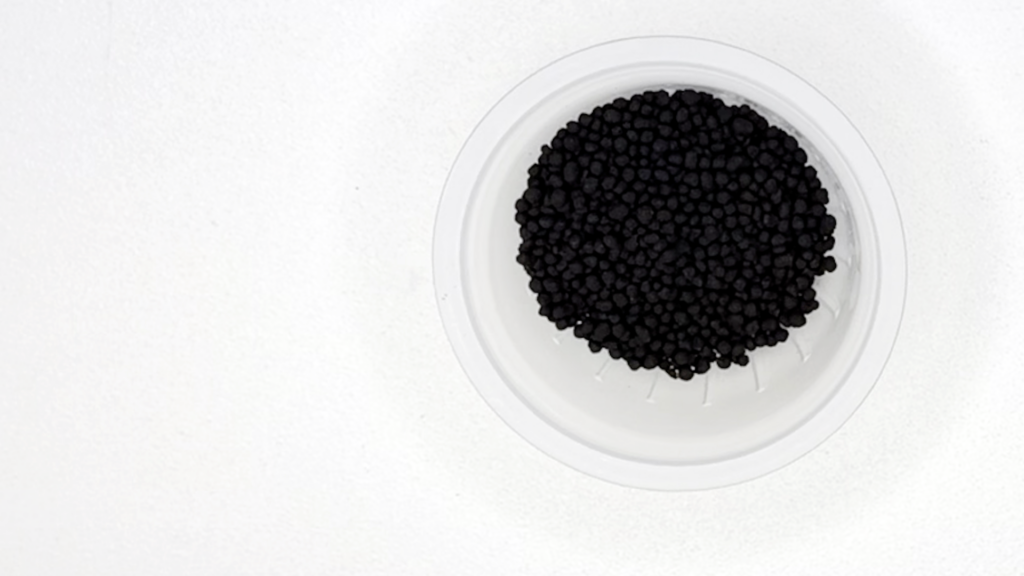
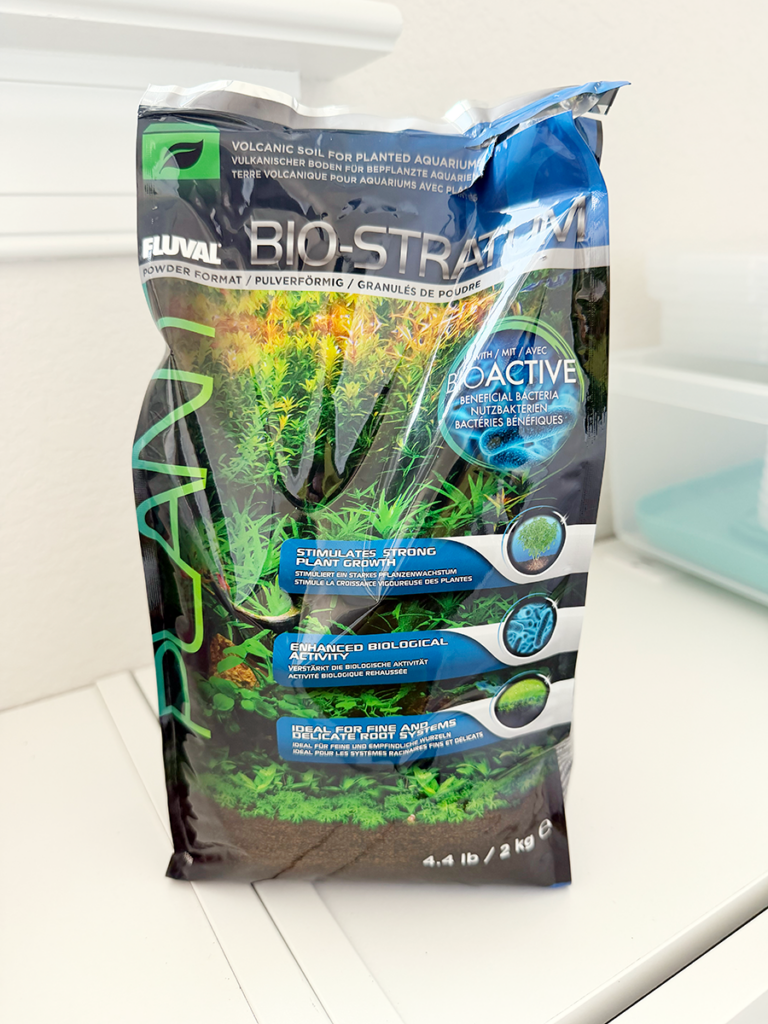
Fluval Stratum is a porous, volcanic soil substrate made by, you guessed it, volcanoes. Stratum is originally made for aquarium plants because it’s lightweight, holds moisture well, and still allows for airflow — which also happens to be perfect for rooting leaf cuttings. Too much moisture and no airflow, and you’re looking at rot. Too little moisture, and your cutting dries out before it has a chance to root.
Quick heads up on cost, though – a 4.4-pound bag ran about $26 at my local Petco, but I found it for closer to $15 to $16 on Amazon (https://amzn.to/4vRAAqr), so if you want to give this a shot, it’s worth shopping around before you buy. (This is an affiliate link — if you purchase through it, I may earn a small commission at no extra cost to you.)
Why It Might Work Well for AV Propagation
A few things make Fluval Stratum appealing for propagation specifically:
• It retains moisture without staying soggy
• Its porous texture gives roots room to breathe
• It’s inert, so it won’t introduce unwanted nutrients or throw off your water quality the way some soils can
• It’s not a hospitable environment for pests like fungus gnats or root mealybugs, since it’s inorganic rather than organic soil
None of this means it’s magic — but the properties do line up nicely with what a rooting AV leaf needs.
How I’m Using Fluval Stratum for African Violet Leaves
Here’s my process, if you want to try this yourself:
1. Choose a healthy, medium-aged leaf (not too young, not too old)
2. Cut the stem at an 45 degree angle, leaving about an inch of stem
3. Pour a small amount of stratum into a fine mesh sieve and rinse off excess dust.
4. Fill a small container with moistened Fluval Stratum. For the best moisture retention, choose a container without drainage holds
5. Make a small hole and insert the stem at an angle, just deep enough to stand on its own
6. Press gently around the base to secure it
7. Place the container in a plastic bag or under a plastic dome to help retain moisture.
8. Place in bright, indirect light and check moisture every few days.
Pro tip: Some growers dip the cut end in rooting hormone before planting to speed things along. It’s optional, but if you wish to try it, this is what I’ve used before.
What I’m Watching For
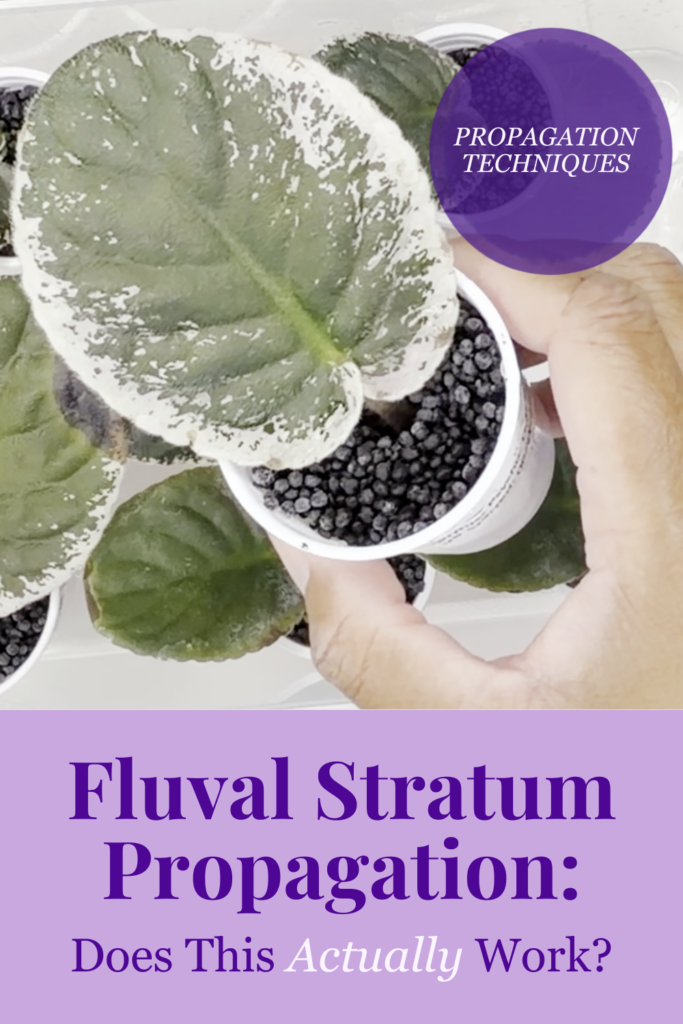
I’m mainly curious how the rooting speed and success rate compare to my usual water and soil methods. I started my experiment with this substrate in late June with some Rivermist leaves I won at my local violet club 50th Anniversary party. About a month later, most of the leaves seemed to have rooted and appear to be healthy. So now it’s a matter of waiting for new babies.
Rooting speed seems to be comparable with leaves I’ve rooted in soil or water at this point, but so far I hadn’t lost any to rot…at least not yet. Most of my leaf loss using the soil method usually happens within the first few weeks, so this at least seems to be promising. Eventually, because I’m a giant nerd, I’ll do a head to head test on all of the methods and you can be sure I’ll let you know all about it when the time comes. 😀
Can You Use Fluval Stratum for Full-Grown African Violet Plants?
Before you go repotting your whole collection in it, a quick word of caution: propagating a single leaf in stratum is a very different situation than potting up an established plant in it.
I’ve heard from other growers that using pure Fluval Stratum as a standalone potting medium for full-grown AVs can actually cause problems. A few reasons why:
• It doesn’t hold nutrients the way a soil-based mix does, so plants can struggle without regular, consistent fertilizing
• It’s denser than a typical AV soil mix, which can affect drainage and airflow around a more developed root system. In fact, I’ve heard reports of it clumping around roots as it breaks down, which is no bueno for your plant.
• African violets have fairly specific watering needs, and stratum’s moisture behavior in a full pot doesn’t always match what an established plant wants
Where it seems to work better is as an additive — mixed into your existing AV soil blend in smaller amounts to improve aeration and moisture retention, rather than replacing your potting mix entirely. Think of it more like a supporting ingredient than a full swap.
I haven’t personally tested stratum as a potting additive yet, but if you have, I’d love to hear how it went in the comments.
Is Fluval Stratum Worth Trying?
If you’ve got a bag of it sitting around from an aquarium project, or you’re looking for a new propagation method to play with, I think it’s worth a shot. Plus, you can try it out as an additive to your soil as well. I doubt it will replace soil propagation for me entirely, especially considering the cost, but I like having options — especially ones that might root a little faster or reduce rot risk.
I’m especially interested in trying fluval with bloom stalk propagation, a particular technique I haven’t had much success with yet in any method. At any rate, I’ve got 4 lbs worth of experimenting to do.
Have you tried propagating in fluval before? I’d love to hear how it went for you — drop a comment and let me know.
Want to see this in action? I walk through the whole process step by step in my latest video — check it out on YouTube!
 Fluval Stratum is a porous, volcanic soil substrate made by, you guessed it, volcanoes. Stratum is originally made for aquarium plants because it’s lightweight, holds moisture well, and still allows for airflow — which also happens to be perfect for rooting leaf cuttings. Too much moisture and no airflow, and you’re looking at rot. Too little moisture, and your cutting dries out before it has a chance to root.