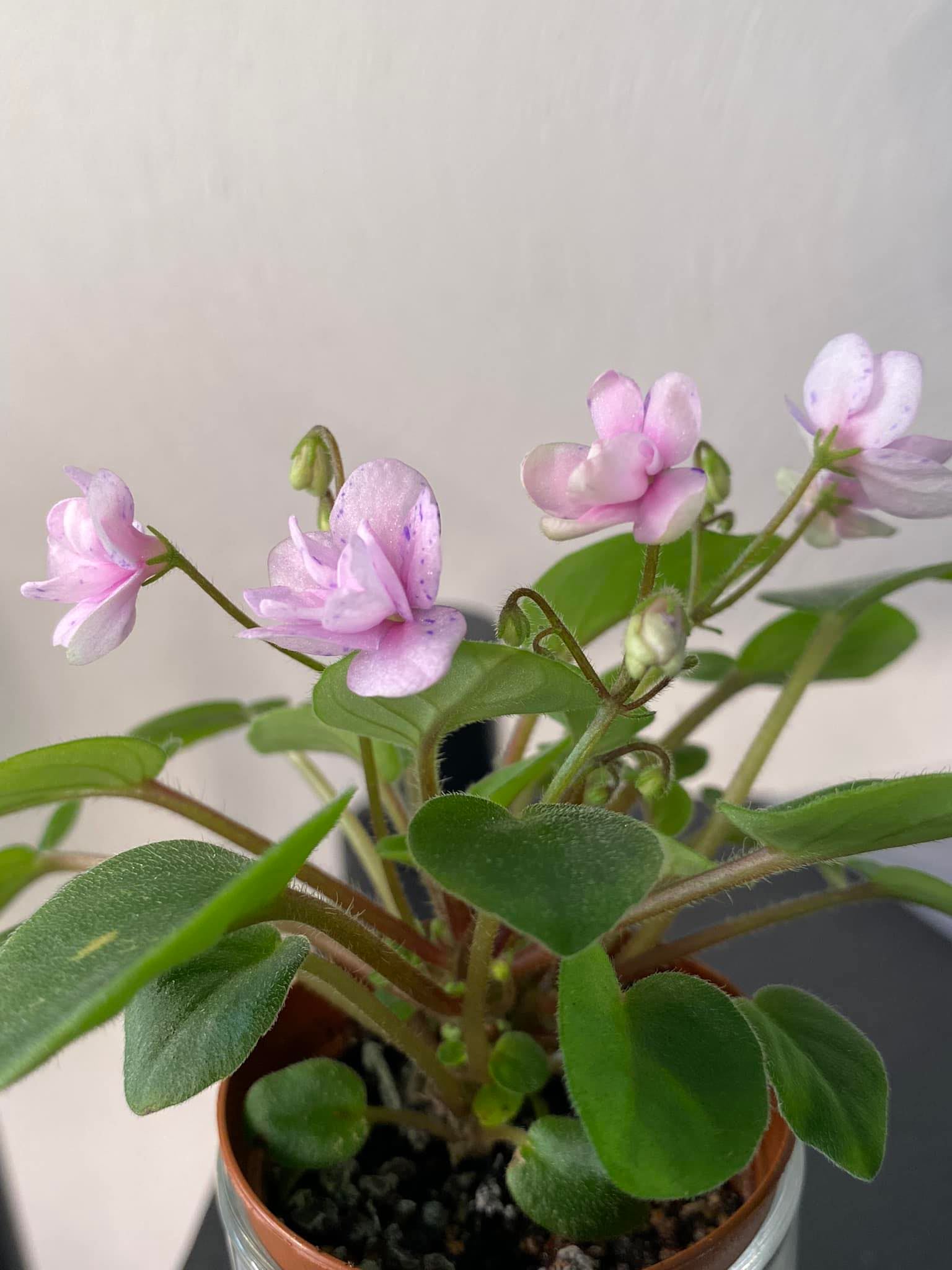

If you’ve just brought home your first African violet — or if you’ve killed a couple and you’re trying to figure out what went wrong — this guide is for you.
I’m Nicolette, and I want to be upfront with you: I was not a plant person. Not even a little bit. The orchid in my kitchen survived despite me, not because of me. My whole African violet obsession started on Mother’s Day 2021 when I spotted a display at Lowe’s on the way to buy a Mother’s Day plant for my mom. I remembered that my own grandmother grew African violets. On a whim, I grabbed two plants for myself, brought them home and named them Rosa and Lee after my grandmother. After the blooms that had attracted me at the store faded and withered away, I waited anxiously in hopes that the plants would bloom again. And…nothing…for months…because I had no idea what I was doing.
A few years, after many, many more plants, even more rescued leaves, and a dedicated plant room later, I’ve learned a lot — mostly through trial and and a lot of error. This guide is everything I wish someone had handed me on day one.
| 📌 Free download: Grab my African Violet Care Cheat Sheet — a three-page quick reference that covers everything in this guide. |
African violets (Saintpaulia) are small flowering houseplants native to Tanzania and Kenya. They’re one of the most popular houseplants in the world — and for good reason. When they’re happy, they bloom almost continuously..
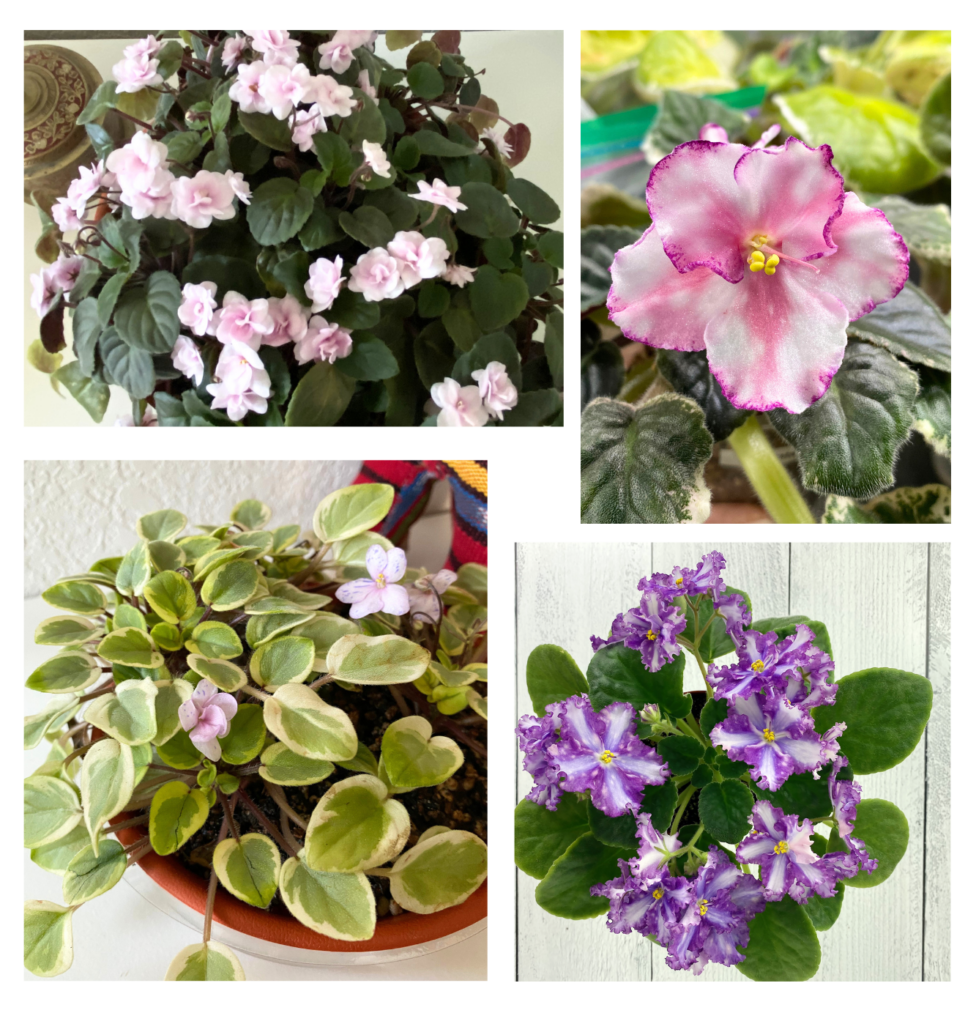
What most beginners don’t realize (I definitely didn’t) is that “African violet” isn’t just one type of plant. The kind that you’re likely to be familiar with when you see them at your local garden center or big box store. Little plant with fuzzy dark green leaves and purple, pink or white flowers.
Here’s the truth that blew my mind in those early days. There are thousands of named cultivars — hybridized varieties with names like Jersey Snowflakes, Rob’s Vanilla Trail, and Buckeye Nostalgia. They come in minis and micro minis that fit in the palm of your hand, standard sizes, and large trailers that spill out of hanging baskets. Leaves that are dark green to light green or variegated in shades of green, yellow, pink and white. Leaves that have frilled edges, serrated edges, or smooth edged. Leaves that are fuzzy…or not. Flowers range from tiny single petals to frilly doubles, in colors from deep violet to pure white to candy-stripe bicolors. Flowers that come with beautiful markings like light pinpoint dots and puffy spots, marbled streaks of color or pinwheel stripes. Once you know that world exists, it’s very hard to own just one.
Before you go down that particular rabbit hole, let’s make sure your plant actually survives. Here’s what they need.
The 5 Essentials for a Thriving African Violet
1. Light: Bright, But Never Direct Sun
African violets need plenty of light to bloom. They should never be in direct sunlight because direct sun will burn or sun bleach those beautiful leaves. The sweet spot is bright, indirect light or light filtered through something like a sheer curtain.
In practice, this usually means:
- A north- or east-facing windowsill is ideal
- South or west windows can work if the plant is a few feet back from the glass or shielded by a sheer curtain
- If your plant is growing but not blooming, it’s almost certainly not getting enough light
- Grow lights are a game changer if your space is dark — a simple LED grow light on a timer (8 – 12 hours on, 14 – 12 hours off) will keep them blooming year-round
- Note: Make sure the leaves of your plant aren’t touching the glass of your window. A sudden heat wave or cold snap will damage the leaf touching the glass
| Quick test: If you can comfortably read a book at that spot without turning on a lamp, it’s probably enough light for your violet. If it feels dim, your plant thinks so too. |
2. Watering: Less Is More (and Method Matters)
Overwatering is the #1 reason African violets die. I know this because it’s how I lost my first couple plants, Bob and Walter (yes, I named them). The soil should never stay soggy — roots sitting in wet soil will rot, and by the time you notice something is wrong, it’s often pretty advanced.
Why is so easy to overwater your violet? Because an overwatered violet looks very similar to an underwatered violet, limp and droopy. But it’s easier for a violet to recover from a lack of water rather than the other way around. So how can you tell if your violet needs water? A simple rule of thumb: water when the top half-inch of soil feels dry to the touch. Not bone dry, not damp — just losing moisture.
How you water matters just as much as when:
- For beginners, bottom watering is best: set the pot in a shallow dish of room-temperature water for about 20–30 minutes, let it soak up from the drainage holes, then remove and let it drain. This keeps water off the leaves and encourages deep root growth.
- Top watering works too, but be careful to keep water off the foliage. Water on fuzzy leaves in bright light or cold temperatures can cause spotting.
- Always use room-temperature water. Cold water shocks the roots and can cause white spots or rings on the leaves.
- If your tap water is heavily treated with chlorine or if your municipal water supply is in question, consider using filtered, distilled, or room-temperature tap water that’s been left to sit overnight. (I eventually got a water distiller — more on water choices in this post.)
3. Soil: Light, Airy, and Well-Draining
Standard potting mix is too heavy for African violets. Their roots aren’t as sturdy as most houseplants and they need a light, airy medium that drains well but holds just enough moisture. If your soil stays wet for more than a day or two after watering, it’s too dense.
You have two good options:
- Buy an African violet-specific potting mix. Look for brands like Espoma or Black Gold (one of my favorites) — these are formulated to drain properly. Serious hobbyists and professional may use Pro Mix MX. Some growers I’ve heard from has had mixed results with Miracle-Gro AV formula as fertilizer is already mixed in the soil. This makes it harder to calculate how much fertilizer your plant is already getting and it’s easy to overfertilize if you are also adding additional fertilizer.
- Mix your own: a common DIY mix is 1 to 1 and a half part perlite to 2 parts peat-based potting mix, which improves drainage and aeration.
| If you stick your finger into the soil and it feels wet and compacted for days after watering, it’s time to repot into a better mix. Good soil is one of the easiest wins you can give your plant. |
4. Pot Size: Smaller Than You Think
One of the most common beginner mistakes is putting an African violet in a pot that’s too large. African violets like to be slightly snug in their pot — a good general rule is that the pot diameter should be about 1/3 the diameter of the plant’s leaf spread.
Too much soil around the roots holds excess moisture (hello, root rot) and the plant often focuses on root growth instead of putting energy into flowers.
When it comes to pot type:
- Plastic pots retain moisture longer than clay — fine if you tend to underwater
- Terracotta/clay pots dry out faster — better if you tend to overwater
- Self-watering wicking pots like the Dandy pot are popular with African violet growers and can make watering more consistent once you get the hang of them. Just make sure that your soil mix is even lighter than usual to avoid waterlogging your roots, at least 55% perlite to 45% peat moss.
5. Fertilizer: Feed Regularly, But Lightly
African violets are regular bloomers, and that takes energy. A balanced fertilizer designed for African violets (look for a formula like 14-12-14 or similar) applied at ¼ the recommended strength with every watering will keep them fed without burning the roots.
Two things to avoid:
- Over-fertilizing: too much fertilizer builds up salts in the soil and can damage roots. Flush the soil with plain water occasionally to clear buildup
- Fertilizing a stressed plant: if your plant is droopy, dry, or recovering from something, wait until it’s stable before adding fertilizer. A stressed plant can’t use it and it can make things worse.
Also, after a fresh repot you can lay off the fertilizer for a couple of weeks while your violets absorb the nutrients from newly fresh soil.
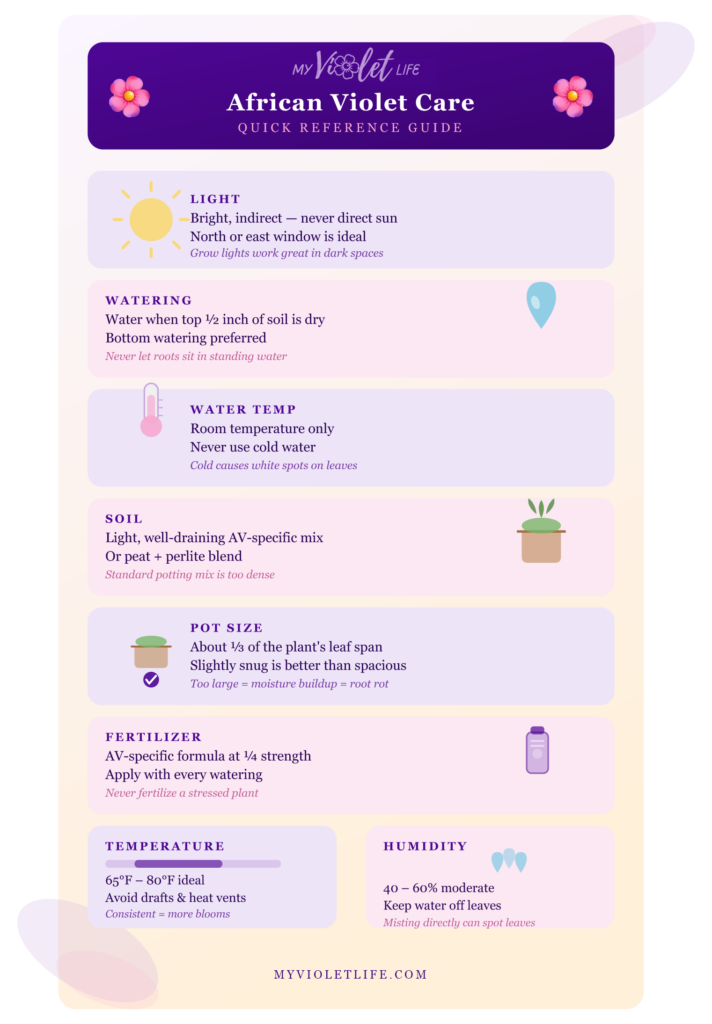
Quick Reference: African Violet Care at a Glance
Common Problems (and What They’re Telling You)
If something looks off with your plant, here’s a quick diagnosis guide:

Bottom line: What violets really prefer is consistency. Consistent light, water, fertilizer and growing environment. Nail down these items and you’re well on your way to a very rewarding and wildly addicting hobby.
Frequently Asked Questions
1. How often should I water my African violet?
There’s no fixed schedule — it depends on your pot size, soil, and environment. More humid environments usually require less watering than dry ones. Check the top half-inch of soil: water when it feels dry, wait when it doesn’t. Most plants end up needing water roughly once a week, but checking is always better than guessing.
2. Why is my African violet not blooming?
The most common reason is not enough light. Move it closer to a bright window (but not in direct sun or touching the glass) or add a grow light. Inconsistent fertilizing and being seriously root-bound are other common causes. For a full breakdown, see: Why Your African Violet Isn’t Blooming. [ADD LINK WHEN PUBLISHED]
3. Can I use tap water for African violets?
It depends on your tap water quality. Many growers use it without issue. If your municipal water is heavily chlorinated or has a strong chemical smell, you might notice it affecting your plants over time. Options include letting tap water sit overnight to let chlorine dissipate, using a filter, or switching to distilled or RO water. I went deep on this in my water guide.
4. Do African violets need special soil?
Yes — standard potting mix is usually too dense and holds too much moisture. AV-specific mixes or a blend of peat and perlite will serve your plants much better.
5. How do I know when to repot?
3 signs it’s time to repot:
- roots coming out of the drainage holes
- the plant is clearly larger than its pot
- the soil has compacted so much that water runs straight through without being absorbed
Most standard size African violets benefit from a fresh pot and fresh soil every 9 to 12 months. Smaller sized violets like semi-miniature and miniatures would need more frequent potting depending on the pot size, anywhere from every 4 to 6 months. I do a step by step guide on how to repot your African violet on my YouTube channel.
Ready to Keep Going?
African violets are genuinely one of the most rewarding plants to grow once you understand what they need. They’re not fussy — they’re just specific. Get the light and watering right, use good soil, and you’ll have a blooming plant that’ll make you embarrassingly proud.