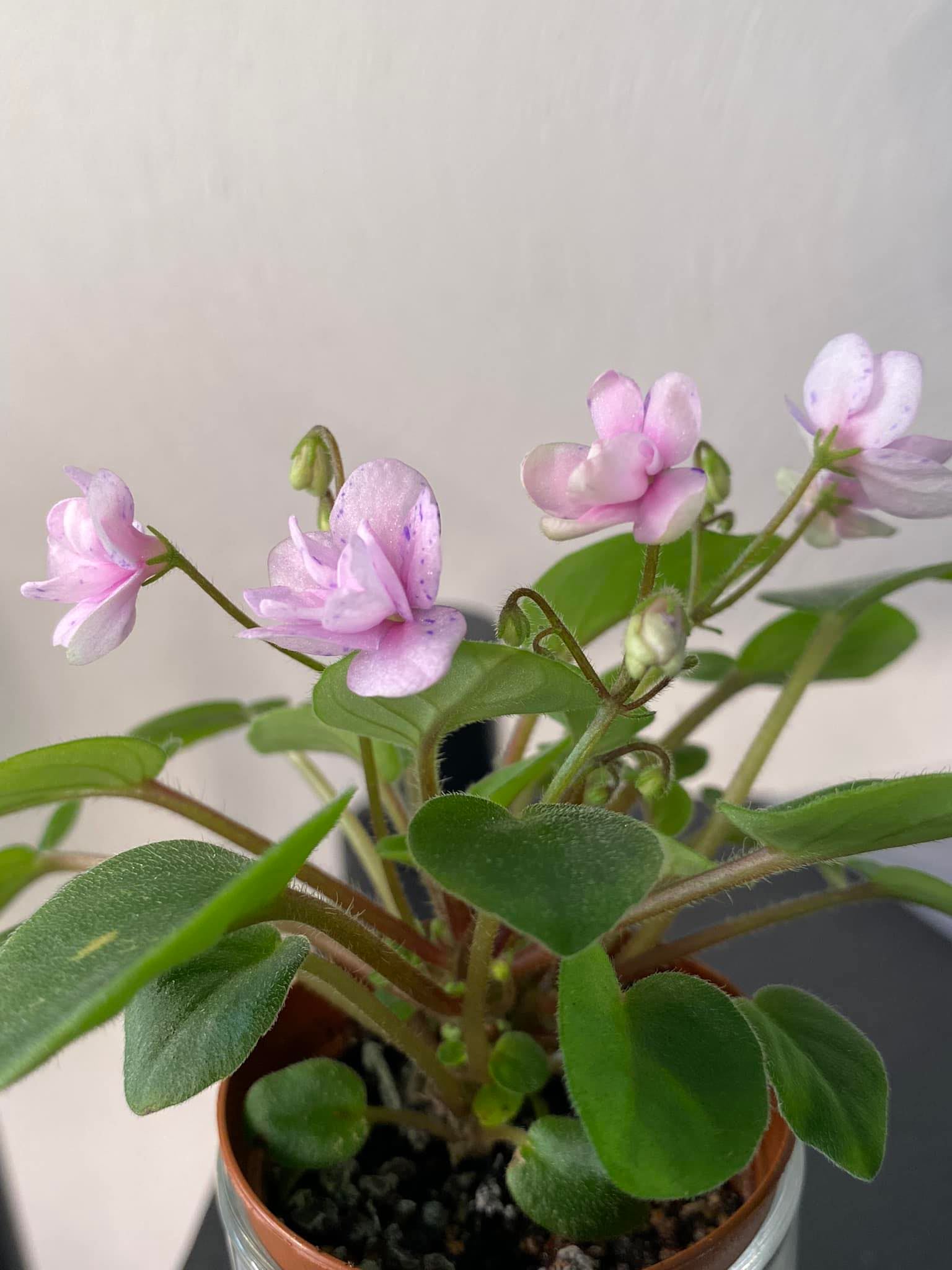

If you’ve ever been grooming a violet and noticed a weird little cluster of leaves growing off to the side instead of in that neat circular crown, congratulations, you’ve found a sucker. And honestly? Finding one is one of my favorite surprises in this hobby, because a sucker is really just your plant offering you a free copy of itself.
I recently went through a whole batch of new violets from our club show and sale, and between the lot of them I found more suckers than I expected, including one that was nearly as big as the mother plant itself. So let’s talk about what suckers actually are, how to spot them, and what to do once you find one.
What is a Sucker?
A sucker is essentially a second plant growing off the main stem of your violet, competing for space within the same pot. African violets are supposed to grow in a single, well-defined rosette, with all the leaves radiating out from one central crown. A sucker throws that pattern off. Instead of one tidy center, you end up with two crowns tangled together, or a cluster of leaves growing sideways, upside down, or in a completely different direction than the rest of the plant.
The one exception to this are trailing African violets whose natural growth pattern includes multiple crowns that allows the violet to trail in a bushy or elongated fashion instead of the familiar rosette shape. But that’s a story for another day.
Sometimes suckers stay small and easy to miss. Other times, if they’ve been growing undetected for a while, they get big enough to basically become their own plant while still attached to the mother.
How to Spot One
The biggest giveaway is direction. Healthy leaves grow outward from a central crown in a neat rosette. A sucker’s leaves grow off to the side, at an angle, or even upside down relative to the rest of the plant. If you look at the stems instead of just the leaves, you’ll often be able to trace two separate growth centers once you know what you’re looking for.
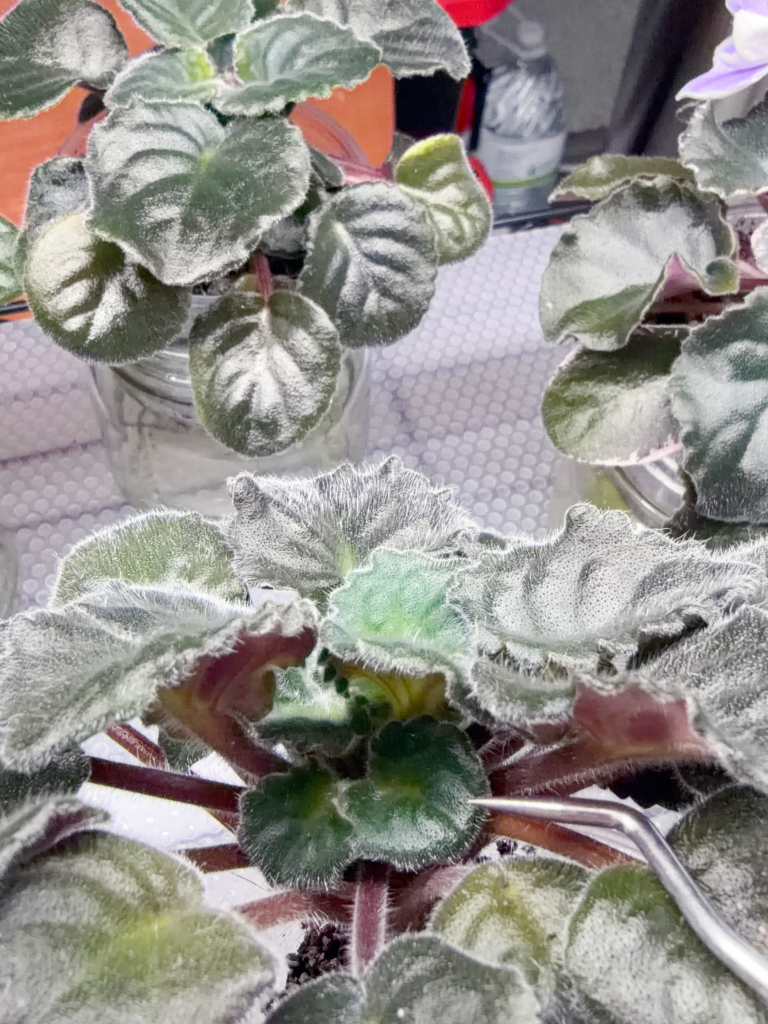
Another thing to watch is that sometimes flower buds look a little like suckers in their beginning stage as many flower buds also have tiny leaves surrounding the developing bud. The giveaway here is to see if those leaves have a bud at the center. That means it’s a flower bud, not a sucker.
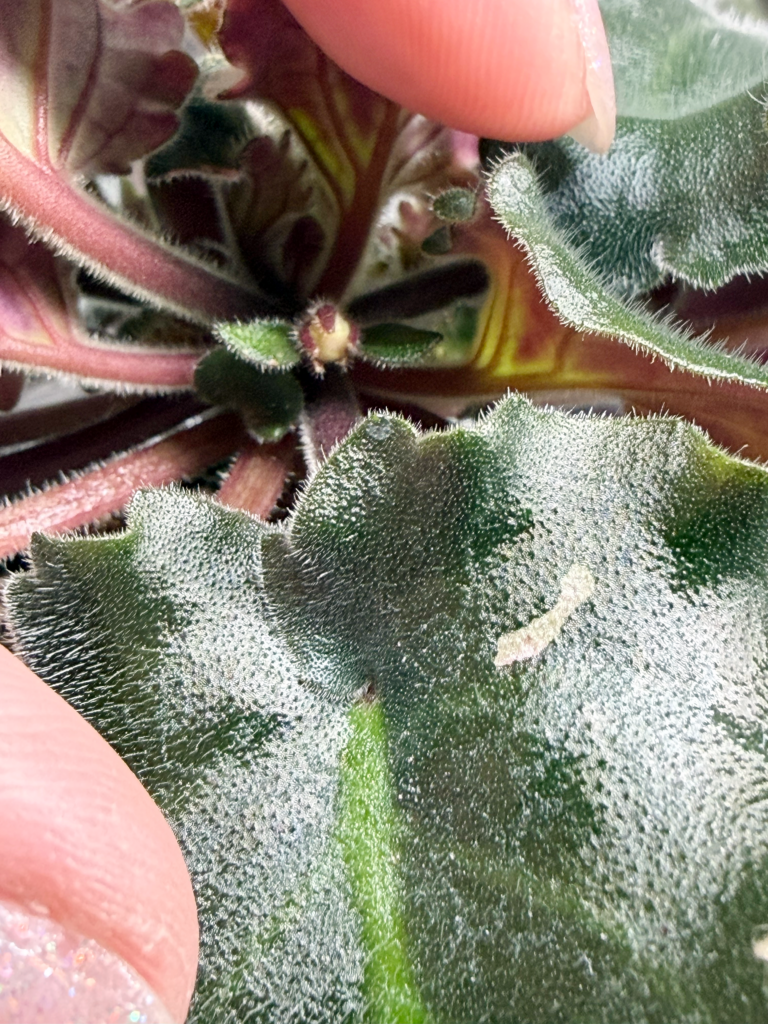
It takes a little practice to tell which leaves belong to the main plant and which belong to the sucker, and honestly, sometimes it really is guesswork until you start gently separating things and see how they move.
Should You Remove It?
You don’t have to. If you’re not ready to attempt separating one, it’s completely fine to leave a sucker in place, though it will eventually compete with the main plant for space, light, and nutrients, and your violet will lose that classic single-crown shape.
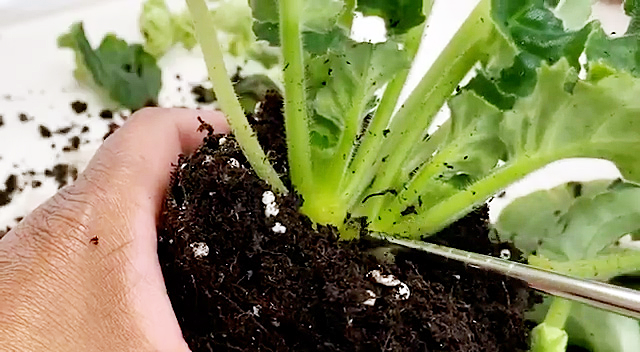
If you do want to remove it, you have two options depending on the size: smaller suckers can often just be gently pulled or teased away from the main stem. Larger ones usually need a clean cut with a sterilized knife or scalpel, made as close to the main stem as possible. Either way, expect to break a leaf or two in the process. That’s completely normal and not something to stress over.
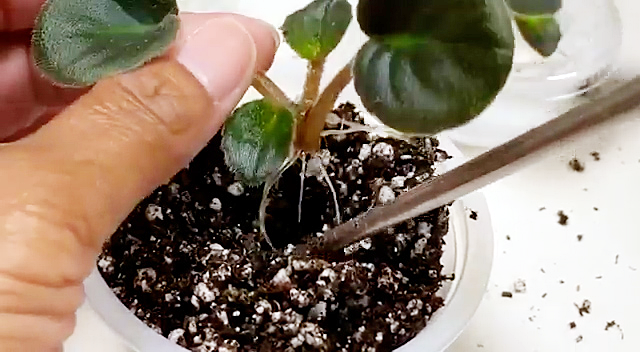
If the sucker has any roots of its own, try to keep as many as possible attached when you separate it, since that gives it a head start. If it doesn’t have roots yet, don’t worry, you have a couple of good options for growing some.
Two Ways to Root a Sucker
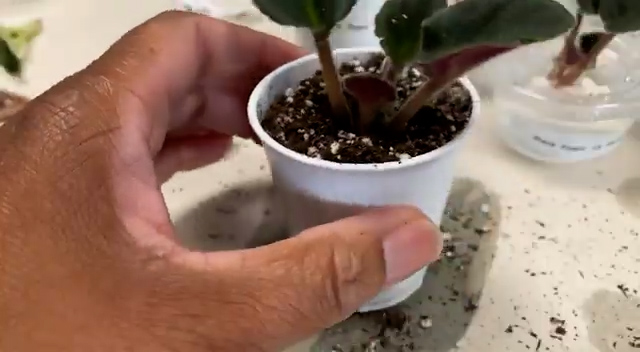
Directly in soil. Pot the sucker up just like you would any new plantlet, using a small container rather than a large one. This is important: too much damp soil around a rootless sucker is a fast track to rot.
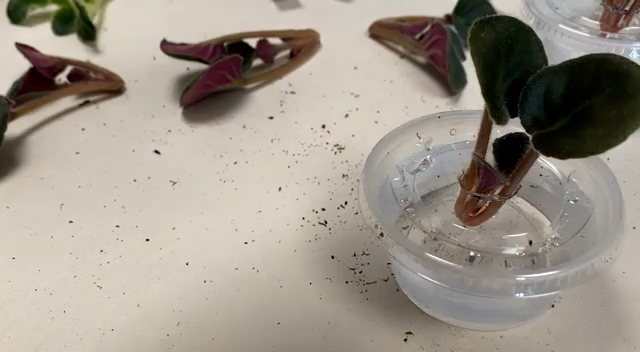
In water first. Root the sucker in distilled water before potting it up in soil. A small container with a lid works well here, poke a hole just big enough to hold the sucker without letting leaves dip into the water, which can cause rot. Expect to wait a few weeks to a month before real roots start forming. This method takes longer, but it lets you see exactly when roots are developing rather than guessing, and it tends to be a little more forgiving against rot.
PRO TIP: Once your sucker actually has roots, whether from soil or water rooting, add a systemic insect control to the soil. It won’t do much good before roots exist to absorb it, but once roots are growing, it helps protect your new plant from pests right from the start.
Why Bother With Suckers at All?
Because they’re basically free propagation without much effort on your part. Out of one recent cleanup session, I pulled multiple suckers off a single plant and ended up with several bonus violets I didn’t have to buy, trade, or wait months to propagate from a leaf. If you enjoy growing your collection without spending more money, keeping an eye out for suckers is one of the easiest ways to do it.
Just remember: not every sucker survives being separated, and that’s okay too. Some come away with barely any crown left to work with. Consider it part of the process rather than a failure.
Curious to see this whole process in action, including the moment I found five suckers on a single plant? Head over to my YouTube channel and watch African Violet Care: Removing Bonus Plants From Your Violets. And if you’ve found a surprise sucker on one of your own violets, tell me about it in the comments, I love hearing about other people’s bonus plants!