Confession: my plant room did not look cute last week.
Between work, visitors, and general life chaos, I fell behind on more than just watering my AVs. Leaves needed grooming, pots needed rotating, and the entire room just needed cleaning in general. And when chores start falling by the wayside, that’s the perfect time for pests to start sneaking into your plant room. So this week, along with the rest of my plant room reset, I did something simple that made me feel a whole lot better about the state of things: I put up fresh sticky traps for my African violets.
Let’s talk about why sticky traps for African violets are one of the easiest, lowest-effort tools in my whole plant care routine — and why I don’t think I’ll ever go back to skipping them.
Why I Started Using Sticky Traps In My Plant Room
Here’s the thing about pests on AVs: by the time you can SEE a problem with your naked eye, it’s usually already a problem. Fungus gnats, whiteflies, thrips, and aphids — they’re sneaky, and violets have a way of hiding trouble under all those fuzzy leaves and underneath the soil.
Sticky traps for African violets solve that by doing the noticing for you. They don’t discriminate, they don’t judge, they just quietly catch whatever’s flying around your plant shelves so you can see it. It’s basically a pest report card, and I need all the early warnings I can get.
What Sticky Traps Actually Do (Monitoring, not Miracle Cure)
While sticky traps are great, please don’t think a pack of them is going to solve an infestation on its own. It won’t. What it will do is tell you that you MAY have an infestation, often before it’s obvious, which honestly might be the more valuable job.
Think of them as a monitoring tool first, and a minor population control tool second. If you’re seeing a trap fill up fast with fungus gnats, that’s your cue to check your watering habits (overwatering is basically a gnat invitation), refresh your Bonide application, or look closer at your soil. If it’s whiteflies or thrips, you might need to look at a new plant you brought in recently. The trap doesn’t fix the root cause — but it absolutely points you toward it.
What I Use
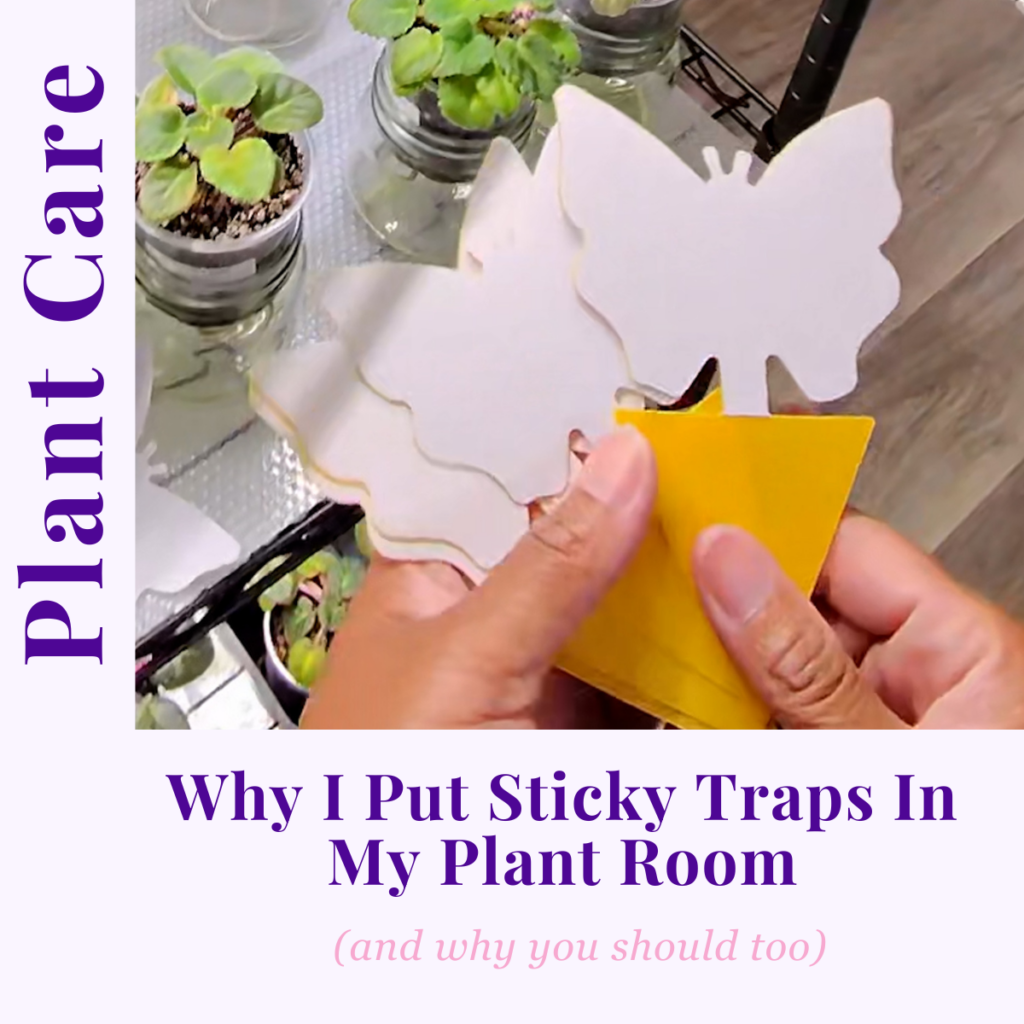
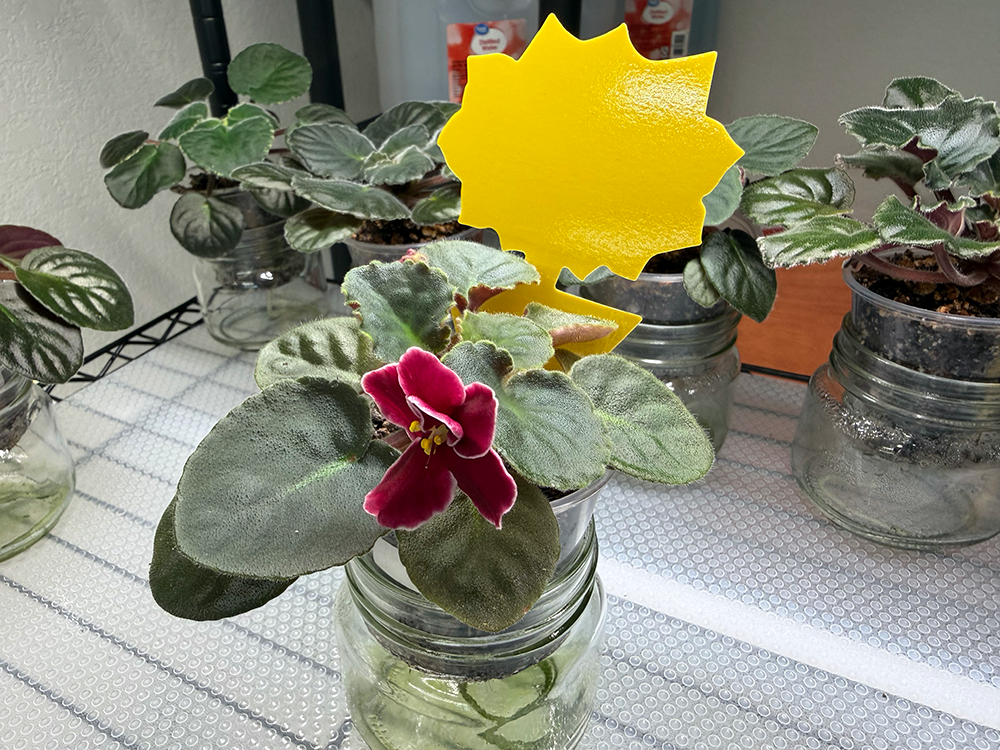
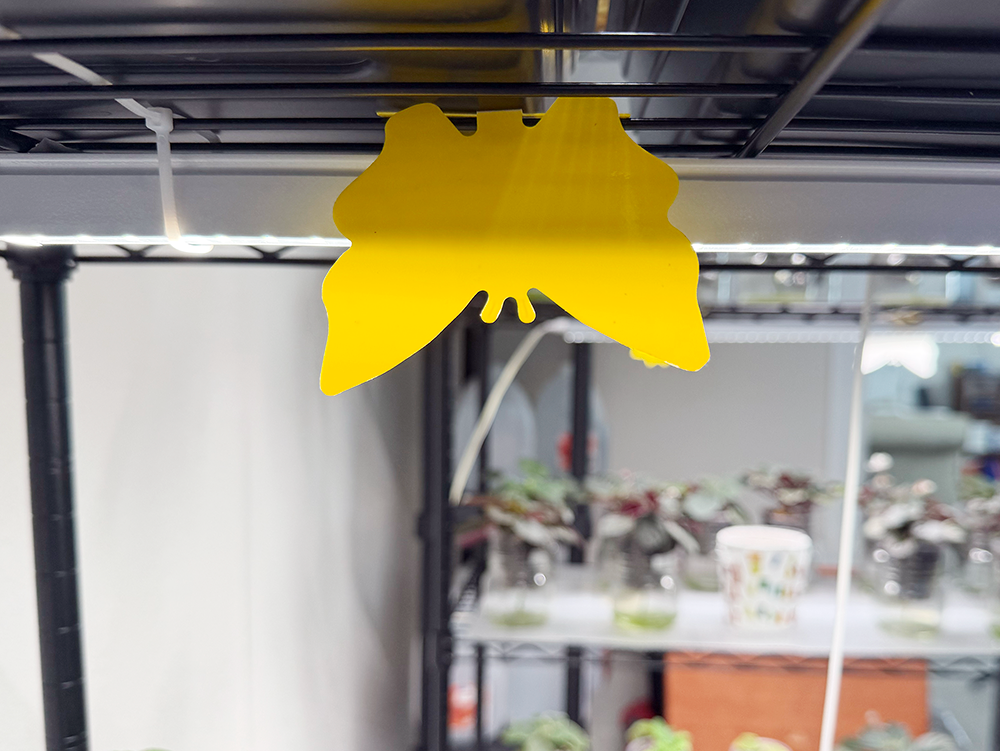
I picked up a pack of 96 yellow sticky traps for African violets on Amazon. The pack of 96 is more than enough to handle all of my racks and enough for several months of changes as well. They’re the stick-in-the-soil style — you just peel the protective film and poke the stake right down into the soil next to the plant. I’ve got way too many plants to do this, so I just slip the pointed end on the underside of my plant racks.
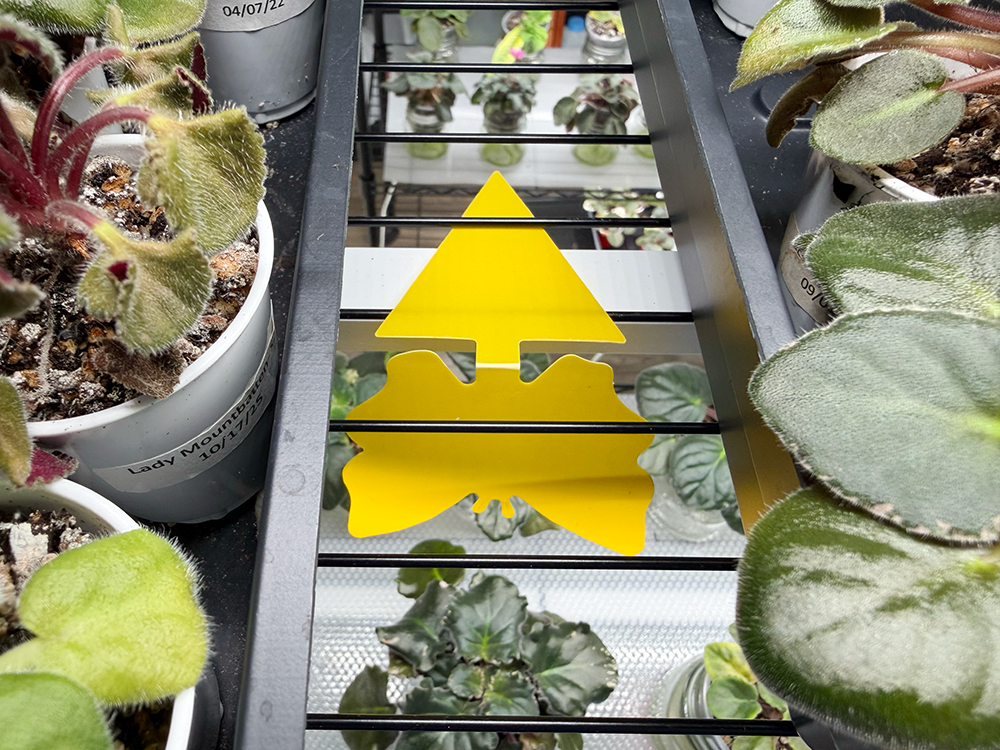
They’re non-toxic, no sprays, no odor, nothing I have to worry about drifting onto my violets or into the air I’m breathing while I putter around in there.
How I Use Them Without Overdoing It
If you have a lot of plants, you don’t have to put a trap in every single pot. That would be overkill, not to mention it would distract from the lovely blooms and quite possibly catch on some of the fuzzy AV leaves. Instead, space them out every few plants across a shelf. That will give you a good general read on what’s happening in that area without turning your whole collection into a sticky obstacle course. Or if you have a wire rack like I do, you can hang two or three traps from the underside of the rack.
I also try to actually look at them regularly, not just stick them in and forget about it. A trap only helps if you’re checking it — otherwise it’s just decor at that point.
Signs to Watch for on Your Traps
Once your traps are up, here’s roughly what you’re looking for:
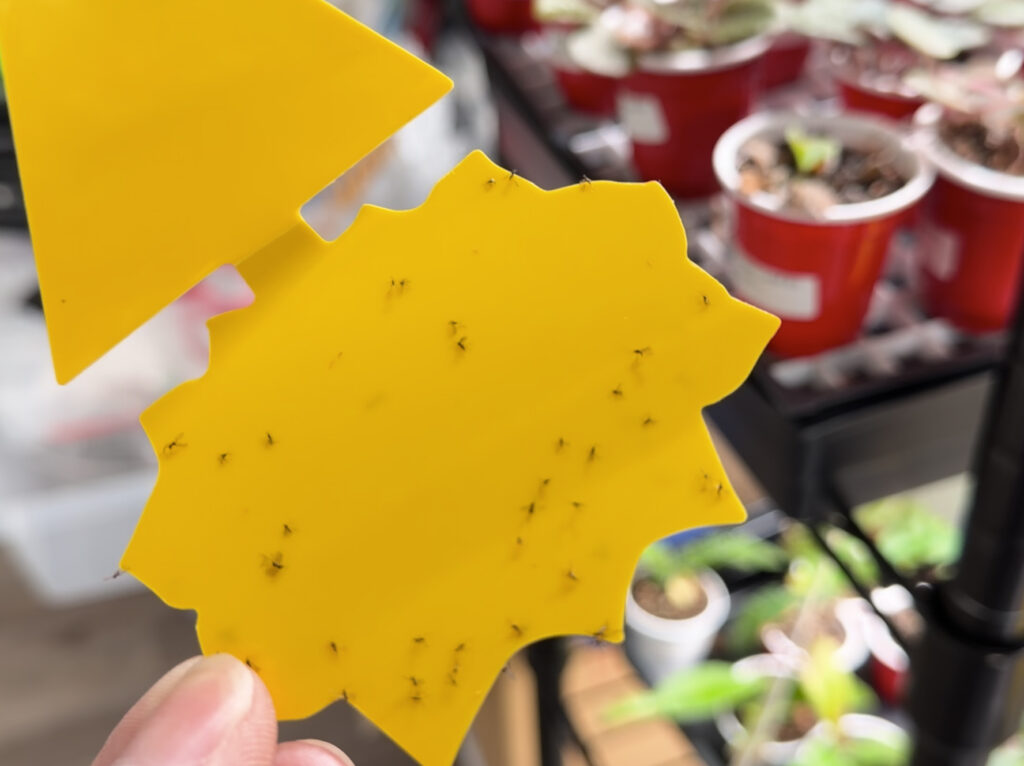
- Tiny black flying specks — likely fungus gnats, often tied to overly wet soil
- Small white or pale insects — whiteflies, which love new plants and warm rooms
- Winged aphids — less common indoors, but worth noting if you spot them
- Nothing at all — genuinely a good sign! Keep doing what you’re doing
If you start seeing a pattern instead of just the occasional stray bug, that’s when it’s worth digging a little deeper into your care routine.
Installing and changing sticky traps for your plant room are one of those unglamorous little habits that make a real difference because they let you catch problems before they catch you off guard. If your plant room’s overdue for a reset like mine was, grabbing a pack of these is an easy place to start.
Have you used sticky traps in your own plant room? I’d love to hear what’s worked (or not worked) for you — drop a comment below! And if you want to see exactly how I set mine up, hop over to my YouTube channel for the full video.